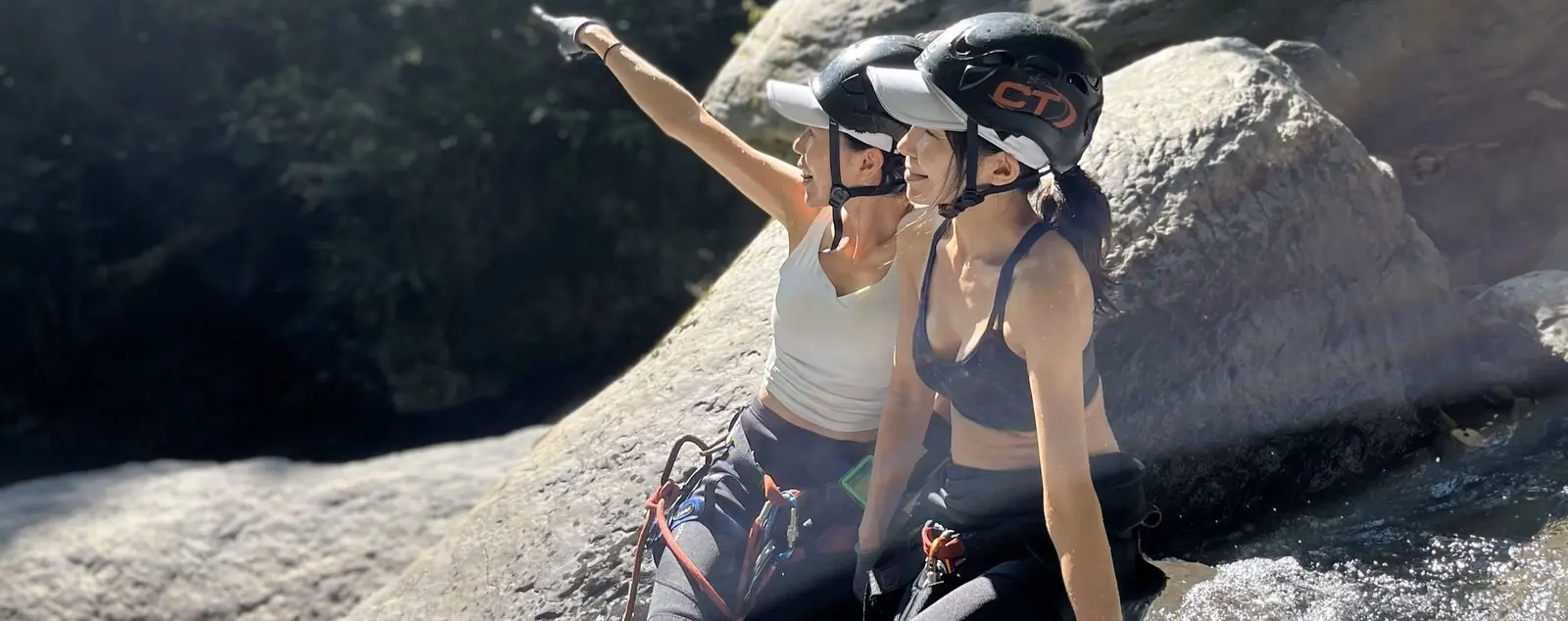
The Safety Realities of Taiwanese Canyoning: Infrastructure, Equipment, and Training Gaps
Taiwan's vertical gorges rival Europe's best — but the sport's infrastructure, regulation, and commercial standards are still in their infancy. A field analysis of the hidden hardware corrosion, training gaps, and environmental volatility that mean Western assumptions of safety don't apply.
Taiwan features some of the most spectacular, vertical river gorges in the world, making it an alluring destination for adventure athletes. However, while the natural terrain rivals the premier destinations of Europe, the sport's infrastructure, regulatory oversight, and commercial standards are still in their infancy. For international canyoneers used to highly developed frameworks, entering Taiwanese canyons requires a recalibration of risk. The environment presents distinct, often hidden dangers that span from deceptive hardware to systemic training gaps.
Here is an analysis of the primary structural and operational safety realities defining the Taiwanese canyoning landscape today.
Deceptive Hardware and Substandard Material
Internal Anchor Decay: Many active routes utilize cheap plated steel anchors rather than marine-grade stainless steel. While they appear visually sound on the outside, the protective plating chips during installation. This allows moisture to penetrate, causing the core to rot completely undetected until the unit fails under load.
Uncertified Commercial Gear: To cut costs, numerous local tour companies equip clients with quality concerned hardware and cheap ropes rather than specialized canyoning gear designed for harsh vertical & aquatic environments.
Degraded Fixed Lines: Gorges are frequently rigged with low-grade or highly UV-degraded ropes left behind by local hunters or indigenous groups, which are entirely unsafe for technical progression.
Guide Competency and Training Gaps
Minimal Formal Certification: Unlike Europe's strict training & certification frameworks (such as the CIC🇪🇺🇩🇪 / AIGC🇮🇹 / ICAN🇪🇺🇲🇽 / ICOpro🇪🇺), a large portion of commercial guides in Asia operate with highly limited, non-standardized training.
Deficient Aquatic Rescue Skills: Many operators lack the technical capability to execute complex rescue operations, such as untangling a trapped swimmer or performing a rope-cutting pick-off in heavy, aerated swiftwater.
Poor Risk Assessment: Inexperienced recreational amateurs or local guides often struggle to read volatile hydrology, failing to anticipate how minor upstream rainfall impacts downstream safety.
Environmental Volatility and Layout Shifts
Vanishing Infrastructure: Taiwan's high seismic activity and annual typhoons trigger massive debris torrents. These events routinely shear off, bury, or completely wipe out established anchor stations from previous seasons.
Flash Flood Dynamics: Steep, V-shaped mountain topography accelerates water accumulation, causing water levels in tight gorges to rise to fatal heights within minutes.
Outdated Mapping: Topographical maps (topos) lack standardized European metrics. Because the landscape changes dynamically every monsoon season, printed or digital route guides are frequently obsolete.
Summary
Canyoning in Taiwan demands a high level of self-sufficiency and extreme caution. The combination of hidden anchor corrosion, uncertified commercial equipment, and a lack of standardized guide training means that Western assumptions of safety do not apply. Navigating these volatile, rapidly changing waterways safely requires advanced bolting skills, rigorous gear vetting, and independent swiftwater rescue proficiency.