Navigating Taiwan's Wildlife: Why Wildlife Dangers Are Greatly Exaggerated
Venomous snakes, giant spiders, apex predators — Taiwan's backcountry sounds intimidating, but the reality is reassuringly safe. A factual breakdown of the island's most talked-about creatures, and the one that actually warrants caution.
Taiwan's lush, sub-tropical forests and deep river gorges are home to a vibrant array of wildlife. For adventurers heading into the backcountry, the prospect of encountering venomous snakes, massive spiders, or large apex predators can seem daunting. However, the reality on the ground is highly reassuring. Taiwan's wilderness is remarkably safe, and with basic situational awareness, native fauna poses very little threat to outdoor enthusiasts.
Here is a factual breakdown of Taiwan's most talked-about creatures and why they are rarely a cause for concern.
Snakes: Common But Non-Aggressive
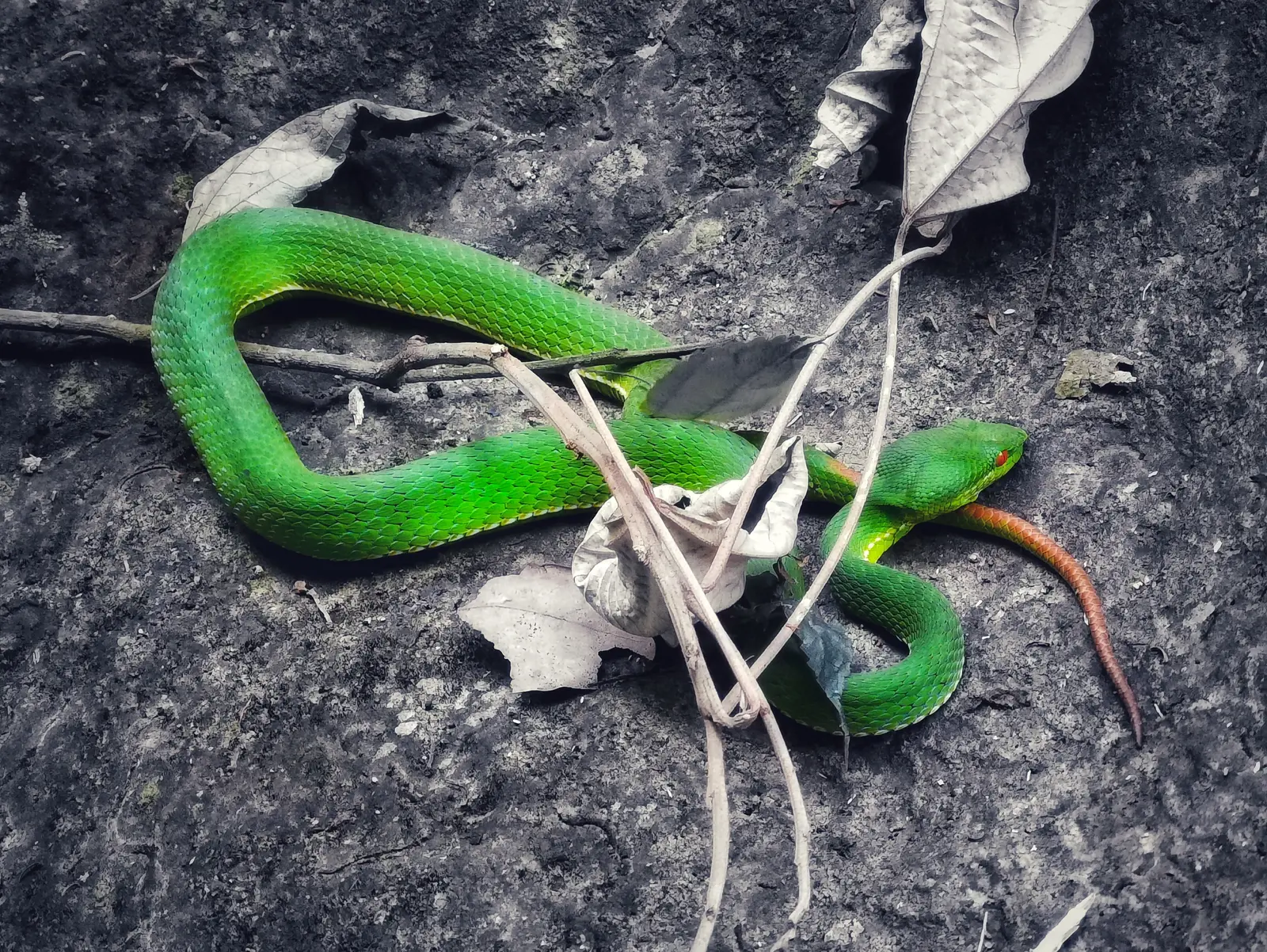
- The Bamboo Viper: The bright green Bamboo Viper (Trimeresurus stejnegeri) is frequently spotted draped over branches near riverbeds. While venomous, they are incredibly docile, rely entirely on camouflage, and will not strike unless directly stepped on or handled.
- Passive Behavior: Popular species like the Pointed-scaled Pit Viper or the Taiwan Cobra are naturally reclusive. They sense the heavy vibrations of approaching hikers or canyoneers long before visual contact is made and actively flee the area.
- Arboreal Hazards: Because some species rest on branches at head or chest height, checking your handholds and avoiding grabbing loose foliage blindly eliminates almost all risk of accidental defensive bites.
Spiders: Intimidating Visuals, Harmless Reality
- Giant Wood Spiders: The Golden Silk Orb-Weaver (Trichonephila clavata) grows to a massive size and spins enormous, golden webs across canyon walls and jungle trails.
- Harmless Venom: Despite their intimidating, colorful appearance, these spiders are completely harmless to humans. Their venom is weak, and they prefer to retreat to the edge of their webs when disturbed.
- Simple Avoidance: Walking with a trekking pole or a stick held out in front of you on overgrown trails easily clears their webs without any physical contact.
Formosan Black Bears: Reclusive and Elusive
- Deep Wilderness Habitats: The Formosan Black Bear is Taiwan's largest predator, but it is critically endangered and extremely rare. They inhabit the deep, high-altitude alpine zones far away from standard recreational corridors.
- Avoidance of Humans: Unlike aggressive brown bear species in North America, Formosan Black Bears are overwhelmingly herbivorous and famously shy. They actively avoid human scent and noise.
- Zero Encounter Rates: The chances of encountering a bear in a technical river canyon are virtually zero, making bear sprays or heavy deterrents entirely unnecessary.
The Real Hazard: Asian Giant Hornets
- Territorial Aggression: The only animal requiring genuine caution is the Asian Giant Hornet (Vespa mandarinia). Unlike snakes, they are highly territorial and will actively defend their nests during the autumn breeding season.
- Scent Triggers: Hornets are agitated by strong perfumes, sweat scents, and dark clothing, which they associate with natural predators like bears.
- Mitigation: Wearing light-colored clothing (white or beige) and immediately retreating in the direction you came if you hear a loud, warning buzz is the most effective safety protocol.
Summary
Taiwan's wildlife is a highlight of its pristine landscape, not a threat to survival. Apex predators are non-aggressive or deeply reclusive, and famous venomous snakes like the green bamboo viper prefer flight over fight. By maintaining visual awareness of handholds and respecting territorial hornets, adventurers can safely explore Taiwan's wilderness without any wildlife anxiety.